
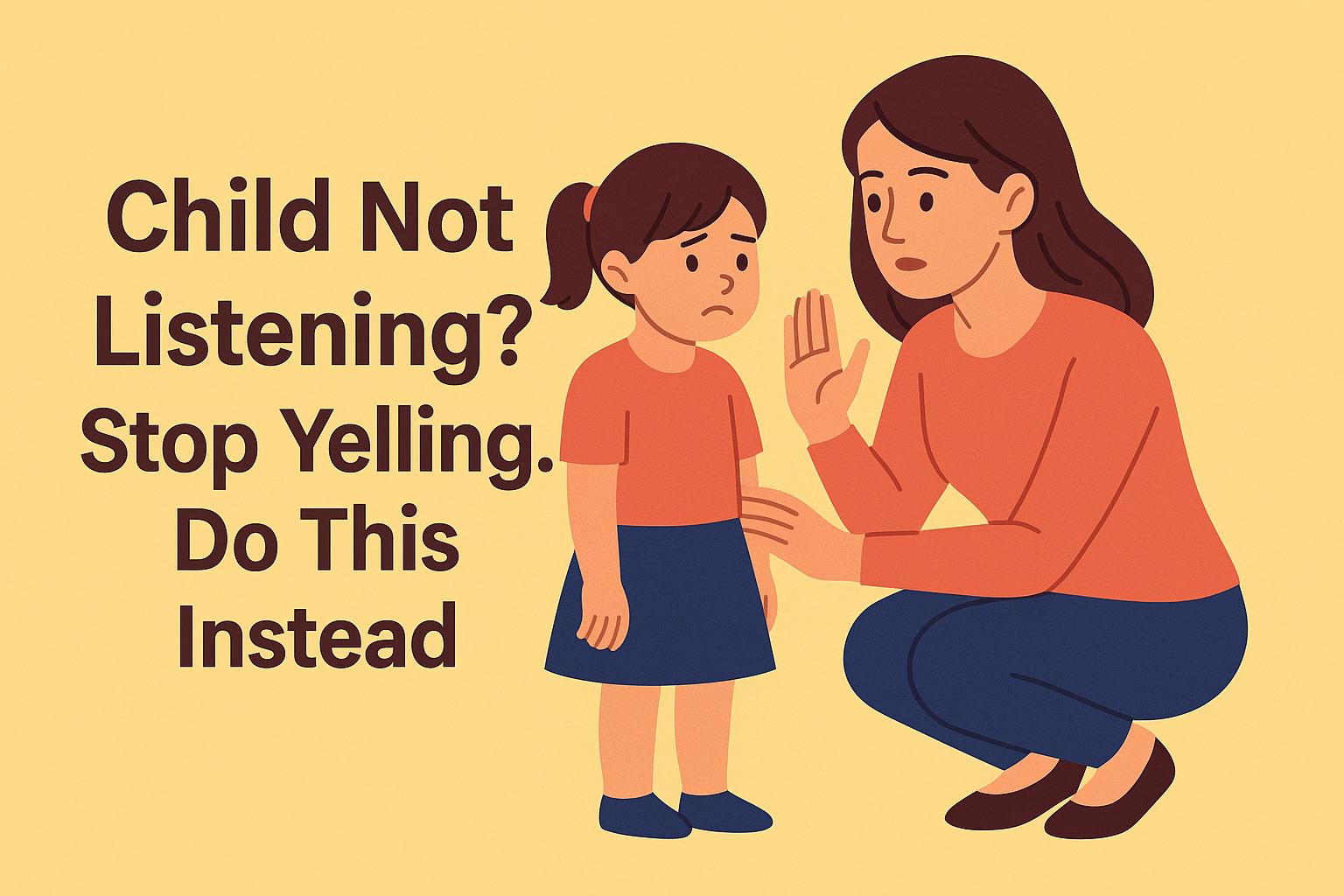
Child Not Listening? Stop Yelling and Try These Effective Parenting Strategies
Effective parenting strategies isn’t about letting children do whatever they want. It’s about setting clear boundaries while treating children with respect, empathy, and consistency. These parenting techniques build trust, improve communication, and encourage children to cooperate willingly rather than out of fear.
Instead of beginning immediately with yelling, start with something relatable. There are moments when a child stops hearing your words and only hear your anger
Every parent has experienced it. You’ve asked your child to put on their shoes…five times. They ignore you. Your frustration grows until you finally yell. For a moment, it works. But afterward comes the guilt. Your child is upset, you’re exhausted, and nothing really changes.
The truth is that children don’t learn cooperation through fear—they learn it through connection. That’s where positive parenting strategies come in.
In this guide, we’ll explore practical positive parenting strategies you can use every day to help your child listen without yelling.
“When kids don’t listen, we often yell. We want obedience fast. But shouting isn’t the answer—it damages trust. You can get cooperation without raising your voice.”
I. The Problem with Yelling
Yelling at children is a common reaction—especially when we’re stressed, tired, or stuck in routine conflicts. But yelling often backfires:
- Erodes trust and emotional safety. When a parent raises their voice, a child may feel scared or shut down emotionally, which undermines their willingness to listen.
- Models aggression. Children learn how to address conflict by watching our behavior. Frequent yelling teaches them that aggression is acceptable when frustrated.
- Short-lived compliance. Yelling may lead to immediate compliance, but the effect is fleeting. Underlying feelings remain unaddressed—meaning the next conflict is just around the corner.
II. The 5 Positive Parenting Strategies That Actually Work
While I don’t have each step from the video verbatim, many parenting experts recommend a structured, calm approach. A fair reconstruction might look like this:
- Pause and compose yourself. Take a moment to breathe deeply before responding. Resetting your emotions gives you a clearer head.
- Get down to their level. Physically lower yourself so you are eye-to-eye with the child. This signals respect and engagement.
- Use a calm, firm tone. Speak clearly and directly—but softly. The shift in energy can prompt better attention and cooperation.
- Offer choices or solutions. Instead of “Do this,” try “Would you like to do it now, or in five minutes?” Empowering options encourages ownership.
- Acknowledge feelings before enforcing. (“I understand you’re upset about stopping play—this must feel unfair.”) Validating feelings opens emotional connection; only then offer your expectation.

III. Why This Method Works
- Emotional regulation. When you respond calmly, you help normalize composure during conflict. This teaches children how to regulate their own emotions.
- Respect breeds respect. Getting on their level, offering choices, and using gentle language communicates that you see them as capable individuals. It encourages reciprocal respect.
- Understanding supports cooperation. Validating how a child feels doesn’t excuse the behavior. Rather, it clarifies that their emotions are heard—and that boundaries aren’t personal attacks.
IV. Real-World Application
Imagine a child refusing to get ready for school. Instead of shouting “Get your shoes on now!” a calmer method would be:
- Pause. Take a breath.
- Approach gently. Lower yourself to their eye level.
- Speak calmly. “I see you’re enjoying playing, and it’s hard to stop when you’re having fun.”
- Offer a choice. “Would you like to put your shoes on first or your jacket first?”
- Follow through. If they still refuse, remind them kindly, “When you’re ready, I’ll help you.”
Over time, this helps children internalize cooperation and feel more emotionally safe.
V. Broader Impacts on the Parent-Child Relationship
- Trust deepens. Children learn that even when there are expectations, they won’t be met with anger. That makes it easier to listen when it matters.
- Fewer power struggles. Calmer approaches reduce resistance, not by force but through connection.
- Long-term emotional health. Children who feel heard and treated with respect are more likely to develop empathy, self-discipline, and a stronger sense of self.
Here you get a helfpul video on that found on YouTube:
Everyday examples on how to implement Positive Parenting Strategies
Though every parent may opt for a different approach, these tips will help you connect and cooperate instead of aiming at correcting a child only.
- Spend some time (for example 10 minutes) on uninterrupted one-on-one time daily.
- Praise effort instead of perfection.
- Create predictable routines.
- Stay consistent with boundaries.
- Model the behavior you expect.
- Apologize when you lose your temper.
Conclusion
Yelling may feel like a quick shortcut to get children to listen—but it undermines emotional safety, invites more resistance, and teaches them that anger is the way to resolve conflict. A better alternative is a calm, structured five-step method (as hinted at in the video): pause, connect, speak calmly, offer choices, and empathize. This not only fosters cooperation in the moment but builds a deeper, longer-lasting bond of trust and respect.
- Here’s another article for you: Managing pain in children
- ZERO TO THREE gives each parent the tools they need to raise thriving children website link
For informational purposes only, not a substitute for professional medical advice.




One Comment